BiblioToscana
BiblioToscana — unified discovery for Tuscany’s library collections
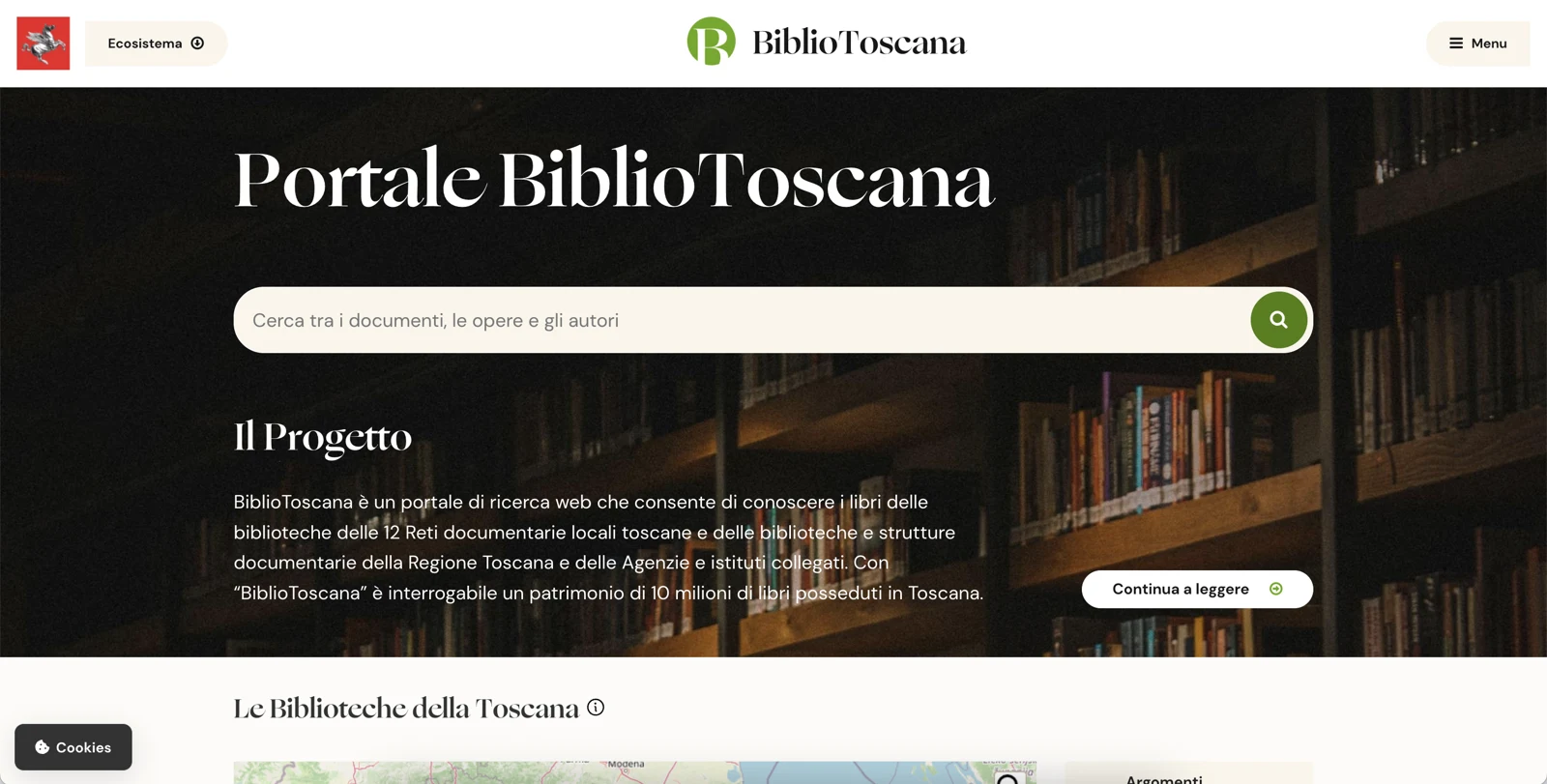
A portal for Regione Toscana integrating heterogeneous library catalogues and connecting works, authors, topics and places through bibliographic search and thematic discovery.
- Client / direct commission
- Regione Toscana
The project at a glance · Illustrated overview
Many catalogues. One search.
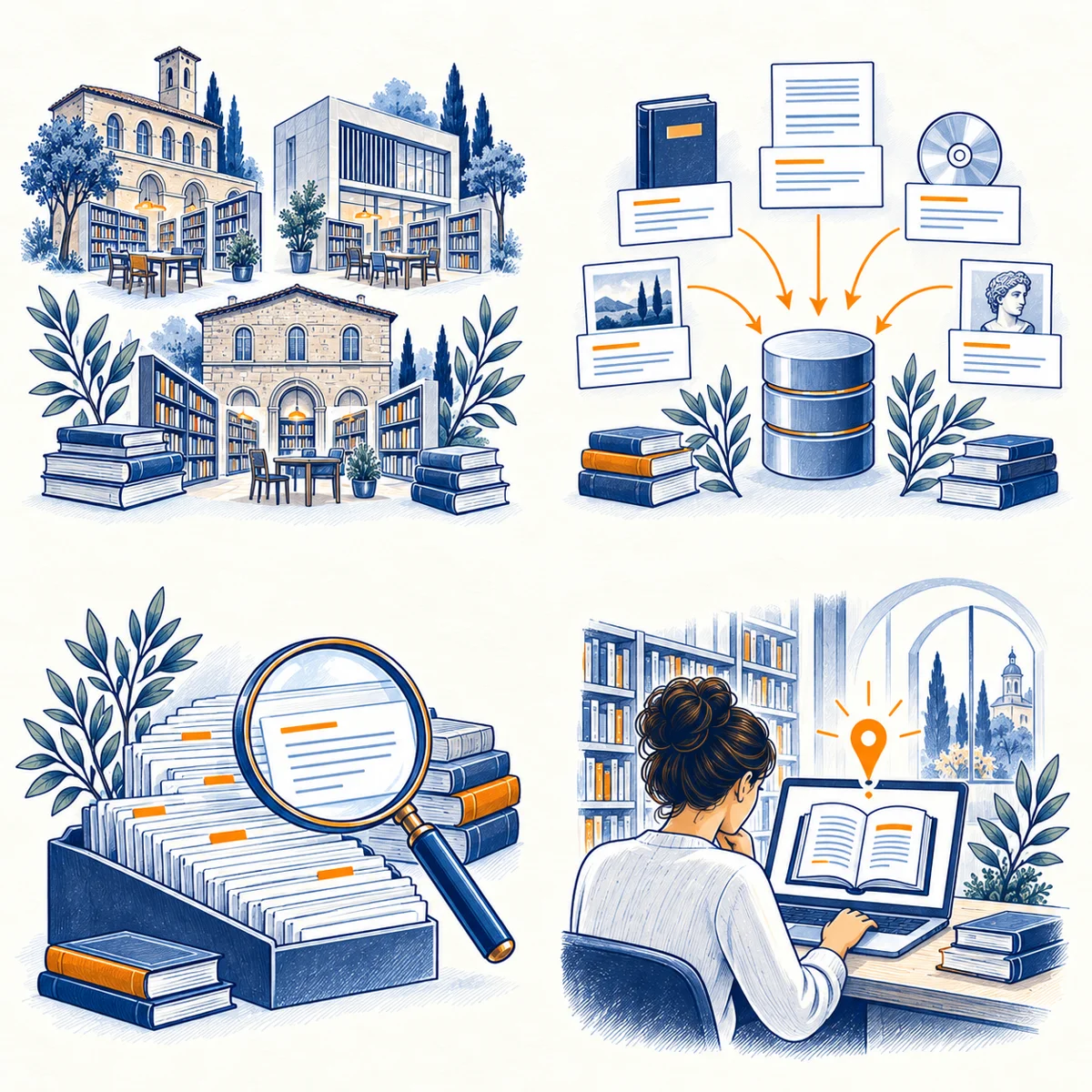
Libraries
Catalogues from different networks.
Connected data
Importing and normalising records.
Search
A shared index to explore works.
Access
Information and libraries holding each work.
01
The challenge
Bibliographic information is distributed across different networks and systems. The project aims to offer a coherent entry point for people starting from a topic or a web search.
02
The solution
Django powers the portal and APIs; MySQL stores configuration and reference data, while Solr indexes records for discovery. Imports collect different bibliographic formats, normalise records and locations, and update the index. Asynchronous jobs handle imports and enrichment, while readers and staff can search works, authors, topics and libraries.
03
Capabilities
- OAI-PMH harvesting and UNIMARC/Turbomarc file imports.
- Normalisation of records, libraries and municipalities, with Solr indexing.
- Catalogue search, work details and autocomplete.
- REST APIs for libraries, search, authors, topics and bibliographies.
- Semantic enrichment from encyclopaedic sources and authority records.
- Asynchronous jobs for imports, enrichment and sitemaps.
Connecting external systems
Heterogeneous library catalogues feed a shared index. OAI-PMH harvesting, bibliographic files, search APIs and enrichment from external sources connect separate systems.
Scale and usage
January 2021: approximately 9 million records from 13 library networks and 5 software systems, grouped into around 3.7 million works. January 2023 to June 2024: over 640,000 visitors and approximately 5 million events/interactions on the portal.
LET’S BUILD WHAT’S NEXT
Start with the problem to solve.
A workflow to organise, systems to connect or a product to build. The first step is understanding the people, needs and constraints.